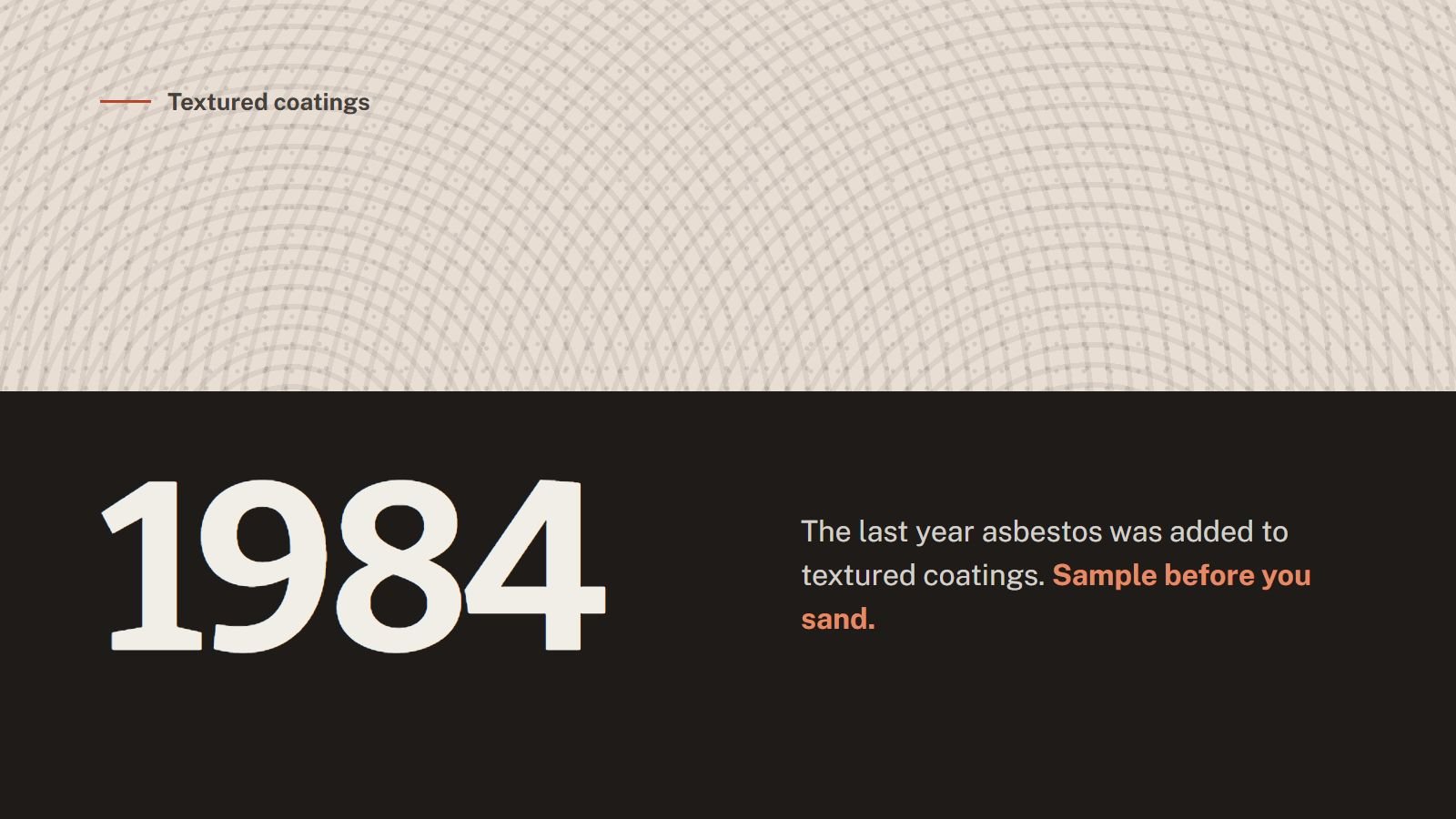
Swirled and stippled ceilings are one of the most common things people ask about. Many are known by trade names such as Artex, and asbestos was added to textured coatings until 1984. Old stock was used for some years after that, so a ceiling in a house from the late 1980s can still contain it.
Why a ceiling in good condition isn’t a risk
In a textured coating the fibres are well held in the material. A ceiling that isn’t damaged and isn’t being worked on can simply be left alone. It can usually be painted, too.
What releases the fibres
- Sanding the coating down, by hand or with a power sander
- Scraping it off dry
- Drilling or cutting into it repeatedly, for example for new downlights
- Taking the ceiling down during a refurbishment
If any of that is planned, find out first. A sample sent to a laboratory will tell you whether the coating contains asbestos.
Your options if it does
- Leave it and paint over it, if the work can avoid disturbing it
- Cover it by overboarding, so it stays in place undisturbed
- Remove it using a contractor trained in asbestos work. Large-scale removal by steaming or gel counts as notifiable non-licensed work, which has extra legal steps for the contractor
Whatever you choose, keep a note of where it is and tell anyone who might drill or cut into it later.
Not sure which applies to your building? Call 020 3386 1854 and we’ll tell you which survey fits, with the price agreed in writing before anyone visits.