The duty to manage comes from regulation 4 of the Control of Asbestos Regulations 2012. It applies to non-domestic buildings and to the shared parts of residential buildings, such as the halls, stairs, lifts and plant rooms of a block of flats.
Who holds the duty?
Whoever has a contract or tenancy that makes them responsible for maintaining or repairing the building: often the owner or the landlord. Where there’s no such agreement, or the building is empty, it’s whoever controls it. A managing agent can do the work for the owner, but can’t take on the legal duty itself.
What it covers, and what it doesn’t
- Covered: foyers, corridors, lifts and lift shafts, staircases, boilerhouses, risers, and shared roof spaces, yards, outhouses and garages that belong to the block
- Not covered directly: the inside of an individual flat or house, rooms shared by households inside one shared house, and communal lounges in sheltered housing
General health and safety duties still apply to any work done inside a home, and any contractor will need to know what’s present.
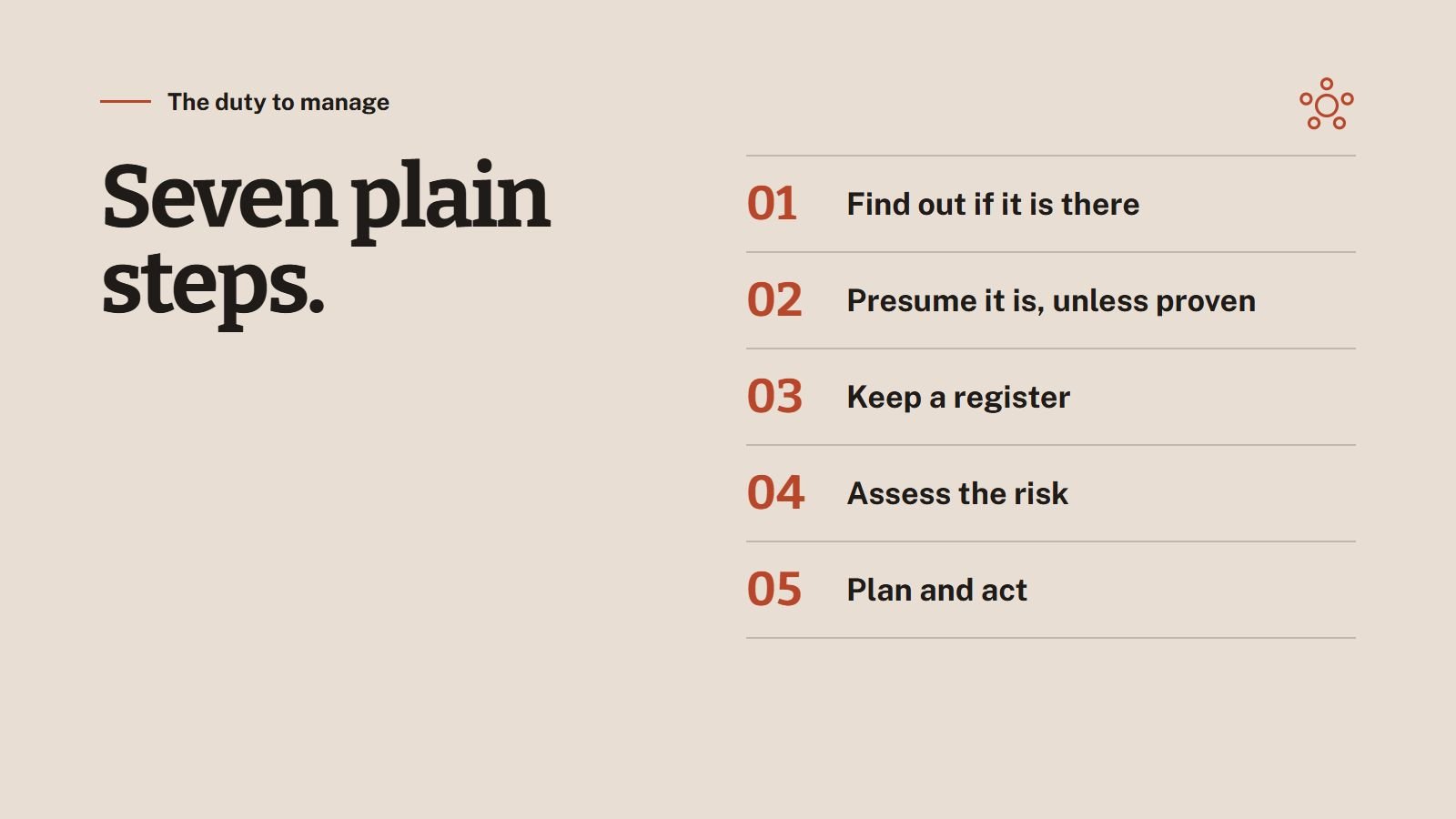
The steps, in order
- Find out whether asbestos is present, with a suitable assessment of every reasonably accessible part.
- Presume a material contains asbestos unless there’s strong evidence it doesn’t.
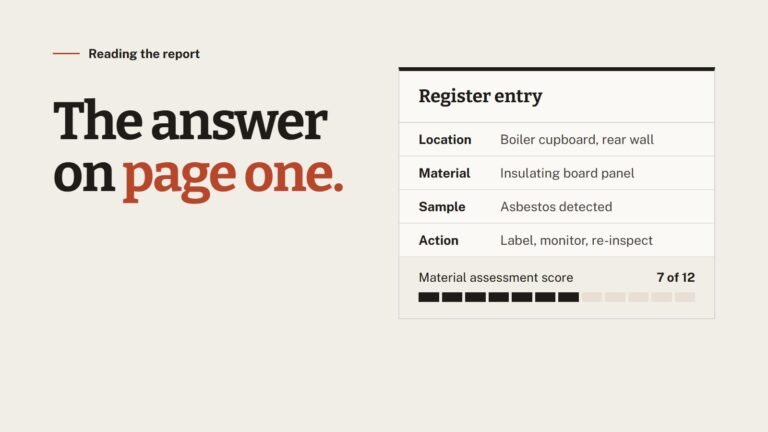
- Keep an up-to-date record of where it is and its condition: your asbestos register.
- Assess the risk of anyone breathing in fibres.
- Write a plan to manage that risk, and act on it.
- Review the plan every 12 months, or sooner if things change.
- Tell anyone who could disturb it, including contractors and the emergency services.
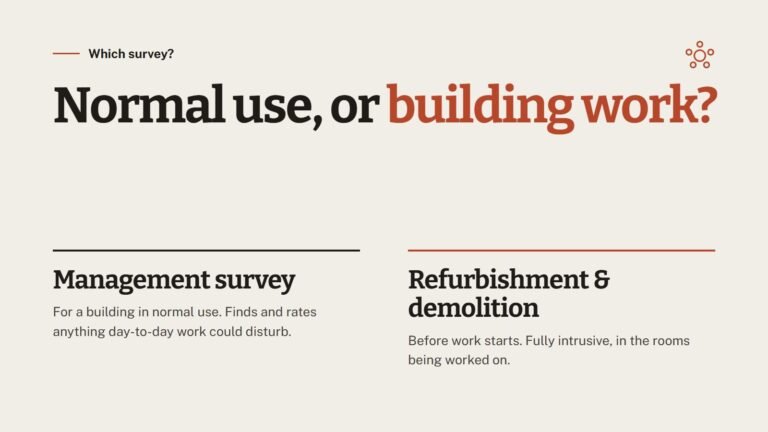
A management survey covers the first four steps. The rest is keeping the plan going, and a yearly re-inspection makes that easier.
Not sure which applies to your building? Call 020 3386 1854 and we’ll tell you which survey fits, with the price agreed in writing before anyone visits.