HSE’s survey guide says a report should be easy to lift straight into an asbestos register. Most follow the same order, so once you know the parts you can find what you need quickly.
The parts of the report
- Summary: where asbestos was found or presumed, areas not reached, high scores and the actions needed
- Scope: what was surveyed, why, and the age and build of the property
- Site details: surveyor names, dates, and the areas included or excluded
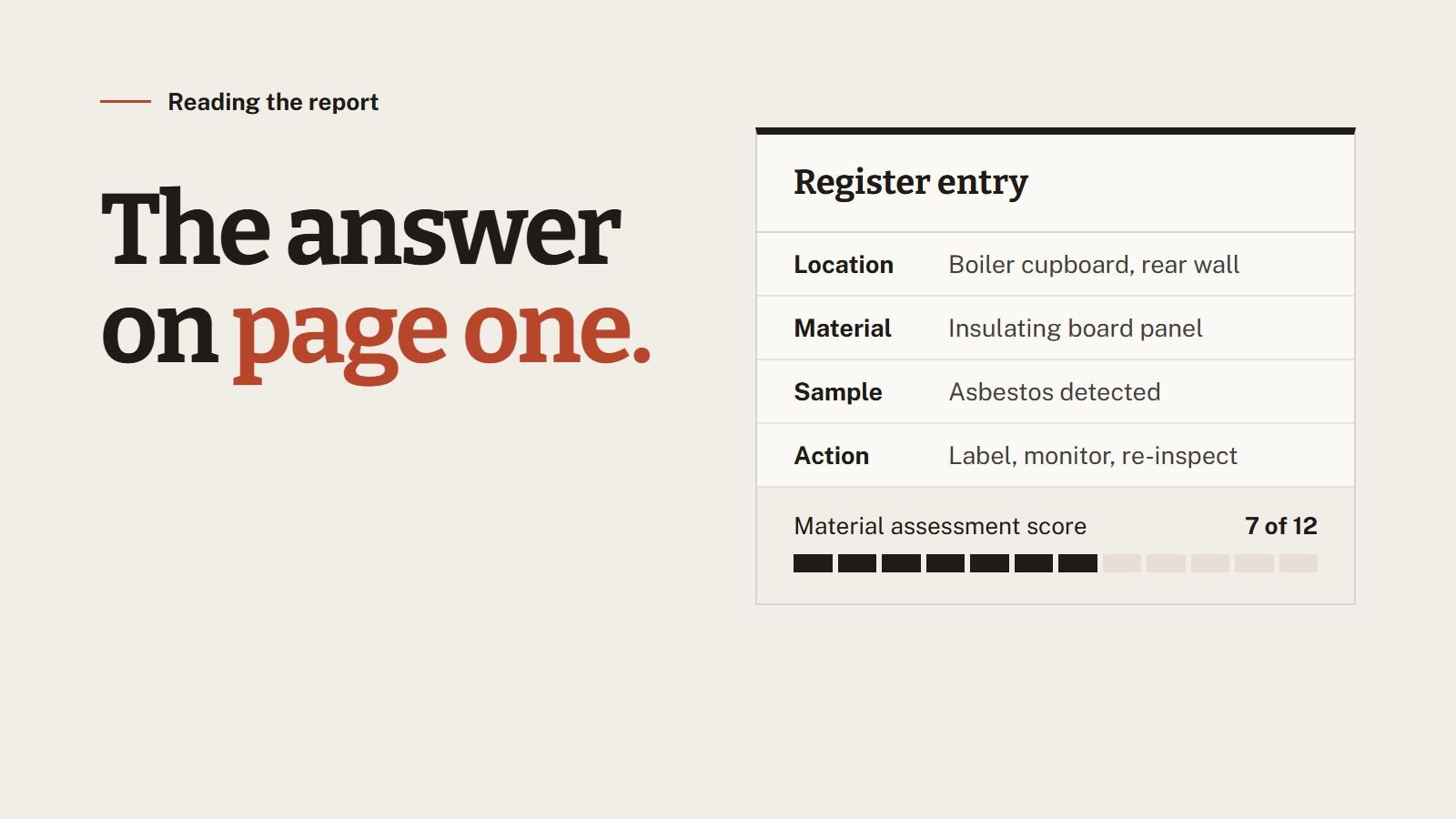
- Results: each item with its location, photo, extent and condition score
- Actions: what can stay and be monitored, and what needs work first
- Lab results: the analysis certificate for every sample taken
The material assessment score
Each item gets a score built from four things: the type of product, how damaged it is, any surface treatment, and the type of asbestos. Together they give a total between 2 and 12.
- 10 or more: high
- 7 to 9: medium
- 5 or 6: low
- 4 or less: very low
A higher score means the material is more likely to release fibres if disturbed. It doesn’t mean it has to be removed: the action column tells you that.
Presumed, sampled and not accessed
Some items are confirmed by a sample. Others are presumed to contain asbestos because they couldn’t be sampled. Any area the surveyor couldn’t reach should be named plainly, and treated as containing asbestos until it’s checked.
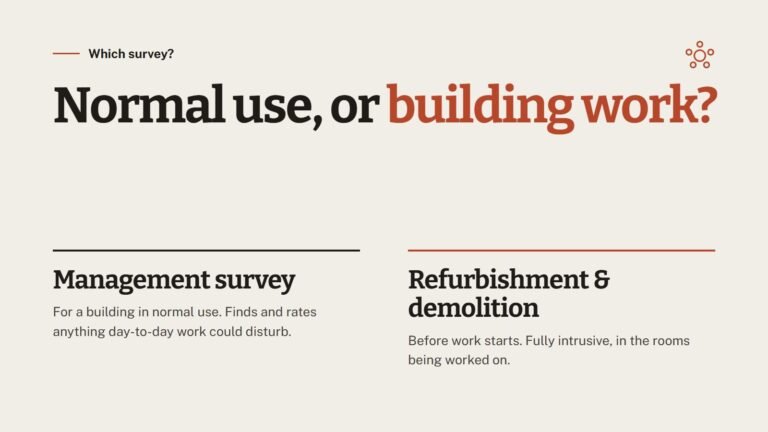
Not sure which applies to your building? Call 020 3386 1854 and we’ll tell you which survey fits, with the price agreed in writing before anyone visits.