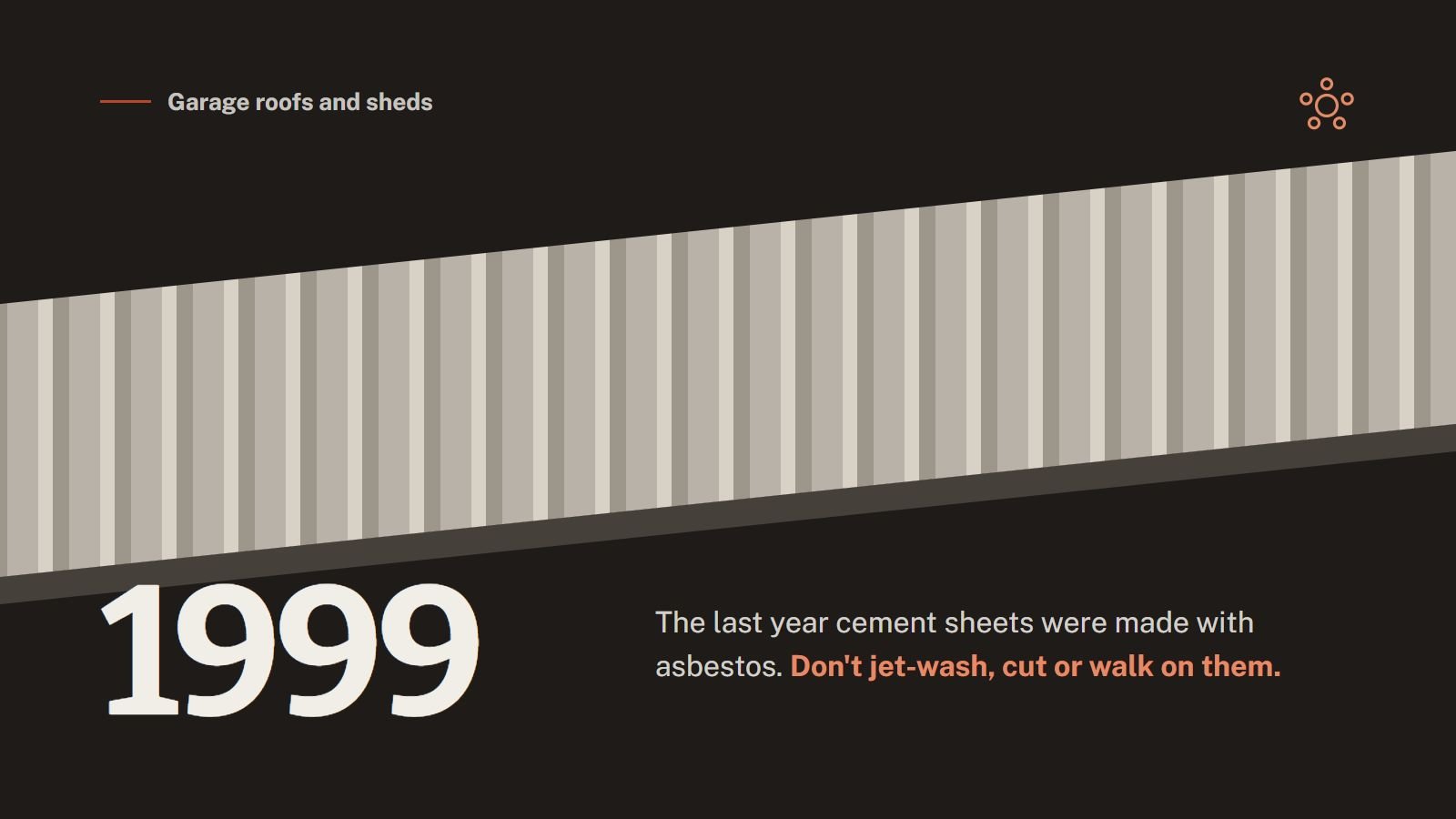
Corrugated sheets on garage roofs, sheds and the walls of older industrial units are some of the most common asbestos materials around Swindon. Cement sheets and pipes were among the last products made with asbestos, until 1999.
When it’s fine to leave
The fibres are bound in cement, so sheets in good condition that aren’t being worked on release very little. Weathering slowly wears the surface, which is why the risk rises with age and wear.
What not to do
- Don’t jet-wash or scrub the roof: roof cleaning releases fibres
- Don’t cut or drill it with power tools
- Don’t break sheets up to make them easier to move
- Don’t walk on the roof: cement sheets are fragile, and falls through them are a serious danger in their own right
If it needs to come off
Careful removal of undamaged cement sheets is non-licensed work, done by a contractor trained in non-licensed asbestos work: whole sheets, kept damp, lowered rather than dropped, and wrapped. Sheets badly damaged by fire or flood are a different job, and count as notifiable non-licensed work.
Asbestos waste is hazardous waste. Ask Swindon Borough Council or your contractor how it can be disposed of before anything is taken down.
Not sure what the sheets are made of?
Newer fibre-cement and metal sheets can look much the same. A sample analysed by a laboratory is the only way to be certain.
Not sure which applies to your building? Call 020 3386 1854 and we’ll tell you which survey fits, with the price agreed in writing before anyone visits.